

CLEAN WATER
Clean Water, Healthy Children
For years, families in a rural community in Ghana’s Upper West Region had no choice but to rely on a shallow, unprotected stream for drinking, cooking, and bathing. During the rainy season, the water ran thick with mud and runoff contamination. During the dry months, it dwindled to a trickle, forcing families to travel farther and wait longer just to collect enough to survive on.
For mothers like Asibi, this daily necessity was also a daily source of dread. Every cup of water carried an invisible risk, and every risk weighed on her as a parent.
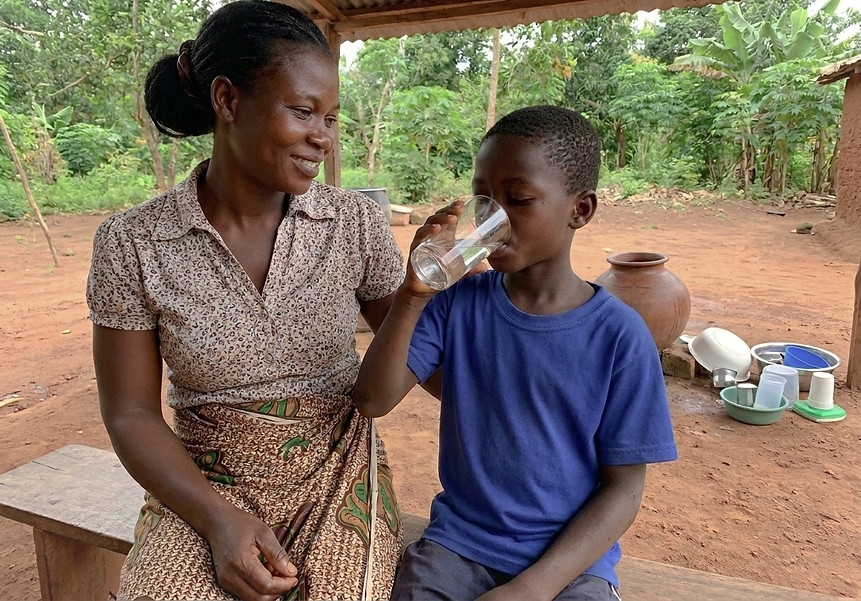
Her eight-year-old son, Seidu, bore the brunt of that risk. He was frequently sick with stomach pain, fever, and diarrhea, the telltale signs of waterborne illness. These episodes often kept him out of school for several days at a stretch, disrupting his education and setting him further behind his peers. Each illness also brought new medical costs, straining a household that already had little room for unexpected expenses. For Asibi, it felt like an endless cycle with no clear way out.
"We knew the water was not safe, but it was the only source we had," she recalled. "Every time my children drank it, I prayed they would not become sick."
A Community Led Solution
Recognizing that lasting change required more than infrastructure alone, Global Aider partnered directly with community leaders and residents of the village to design and establish a reliable, accessible clean water source close to home. This collaborative approach ensured the solution reflected the community's actual needs and that residents felt ownership over its upkeep and success.
But construction was only half the job. Families also sat through hands-on training on things like proper handwashing, safely storing water at home, basic sanitation habits, and keeping water containers clean so contamination doesn't creep back in. Pairing the new infrastructure with these lasting behavior changes was the whole point, making sure the health benefits stick around for years, not just fade after the ribbon-cutting.

The Impact, in Real Terms
The results became visible quickly. Seidu began missing far fewer days of school. With his health stabilized, he had more energy to learn in the classroom, play with friends, and help his family at home. He was no longer defined by illness, but by the everyday rhythms of childhood.
He wasn't alone. Other parents throughout the village reported similarly sharp declines in water-related illness among their children, suggesting the impact extended well beyond a single family.
For Asibi, the change meant something deeper than convenience: it meant relief. She no longer spends hours each day searching for safer water or bracing herself every time her children take a drink. And with medical expenses reduced, her family can now direct more of its limited income toward food, school supplies, and other essentials that had once felt out of reach.
Today, children in the village can drink, learn, and grow with a level of safety and confidence their parents never had. What began as a single water project has become something larger: a community strengthened, a generation of children given a fairer start, and families no longer defined by fear of what might be in a simple cup of water.

Help More Children Have Clean Water
Your support can bring clean water and hope to more families like Asibi.